

Renovation Notes
Open-Concept & Wall Removal in Baltimore Rowhomes: 2026 Cost & Reality Guide
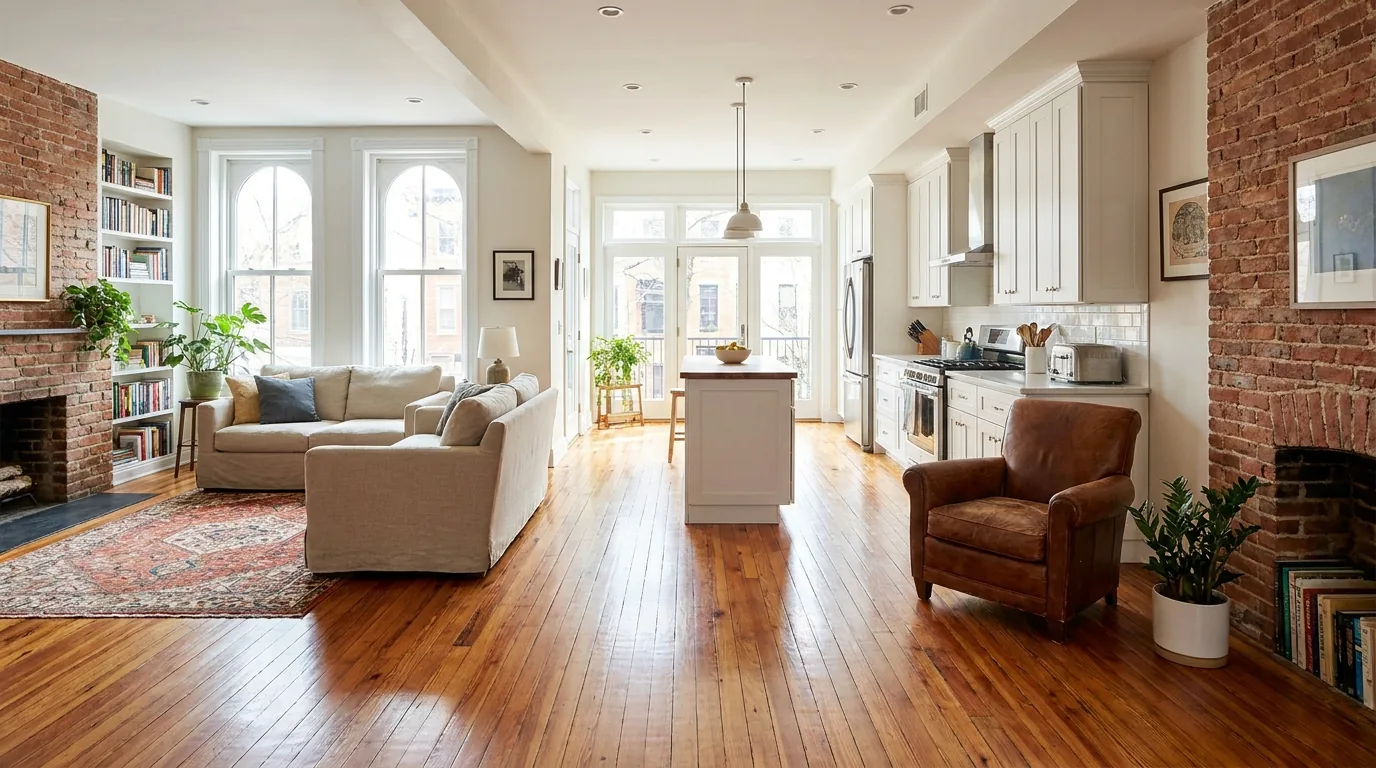
If you own a Baltimore rowhome, you already know the feeling: you walk in the front door into a boxy living room, pass through a doorway into a dark middle room, and squeeze down a narrow galley kitchen to the back. Three small rooms, one behind the other, with maybe one window at each end doing all the work. The number-one renovation request we hear at Monarch Bay Renovations is some version of “can we just open this up?”
The honest answer is usually yes, you can. But “open-concept in a rowhome” is a structural project, not a weekend of swinging a sledgehammer, and the wall standing between your front room and your kitchen is very often holding up the rest of your house. This guide walks through what opening up a Baltimore rowhome actually involves in 2026: load-bearing reality, the beam that replaces the wall, the permit, real costs, and the behind-the-plaster surprises that come standard in homes this old.
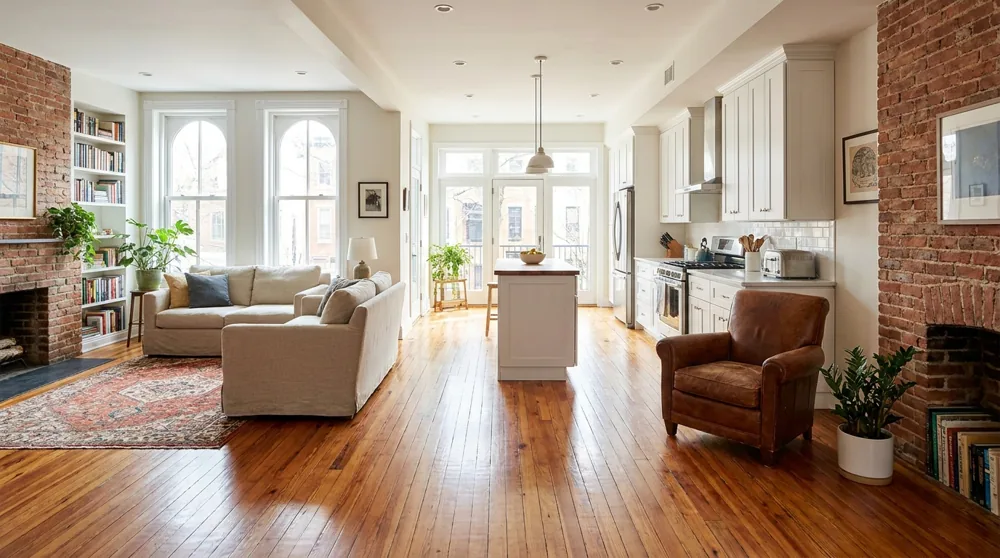
Opening up a Baltimore rowhome lets light travel the full depth of the house and connects the kitchen to the living space.
Why Baltimore Rowhomes Were Built Closed Off
To understand the job, it helps to understand how these houses were built. The classic Baltimore rowhome is narrow and deep, often only 12 to 16 feet wide but 30 to 50 feet front to back, with brick party walls shared with the neighbors on both sides. Because those side walls are masonry and shared, all of your windows and daylight come from just two ends: the front facade and the rear. Everything in the middle is dim by design.
To carry the floors above across that long, narrow footprint, builders ran the floor joists front-to-back and supported them somewhere near the middle of the house, usually on a center bearing wall or a beam stacked over a basement girder. That center support is exactly where a lot of homeowners want to remove a wall to connect the front room to the kitchen. In other words, the wall you most want gone is frequently the one doing the most structural work. That is the central tension of every rowhome open-concept project.
Load-Bearing vs. Partition: The Question That Sets the Budget
Before anything else, one question decides the scope and the cost: is the wall load-bearing or just a partition?
A non-load-bearing partition is a divider. It holds itself up and nothing else. Removing one is mostly demolition, drywall or plaster patching, and dealing with whatever switches and outlets are mounted on it. In a rowhome these are less common than people hope, but they exist, sometimes a later owner added a wall to carve a third bedroom out of a larger room, and that added wall carries no structural load.
A load-bearing wall is part of the skeleton. It transfers the weight of the floors (and often the roof) above it down to the foundation. You can absolutely remove one, but you have to replace its support with a beam, and that beam has to be engineered, sized, and built into the structure correctly. Get this wrong and you get sagging floors, cracked plaster, sticking doors upstairs, and in the worst case a real safety problem.
How to tell, in a rowhome specifically
There are reliable clues, though confirmation belongs to a professional:
- Joist direction. A wall that runs perpendicular to (across) the floor joists is probably carrying them. In most Baltimore rowhomes the joists run front-to-back, so a wall running left-to-right across the middle of the house is a prime suspect.
- It sits over the basement girder. Go to the basement. If there’s a beam, girder, or a line of columns running down the middle, the wall stacked above it is almost certainly load-bearing.
- It stacks floor to floor. Walls that line up directly above and below each other, floor after floor, are usually structural. A wall with open space directly above it on the next floor is more likely a partition.
- Thickness and framing. Older bearing walls are often a little thicker and more solidly built.
What does not work: a stud finder, a knuckle-knock, or a YouTube video. Those identify studs, not loads. We’ve seen well-meaning homeowners take out a wall they were sure was “just a divider” and then watch the bedroom door upstairs stop closing. For more on the indicators, see our deeper piece on how to tell if a wall is load-bearing, but in a rowhome, assume the center wall is structural until an engineer says otherwise.
The Beam That Replaces the Wall: LVL vs. Steel
When you remove a load-bearing wall, the load it carried has to go somewhere. That somewhere is a beam spanning the new opening, and the beam transfers the weight to posts or columns at each end, which carry it down through the structure to the foundation. This is the heart of the project, and it’s why a structural engineer is non-negotiable.
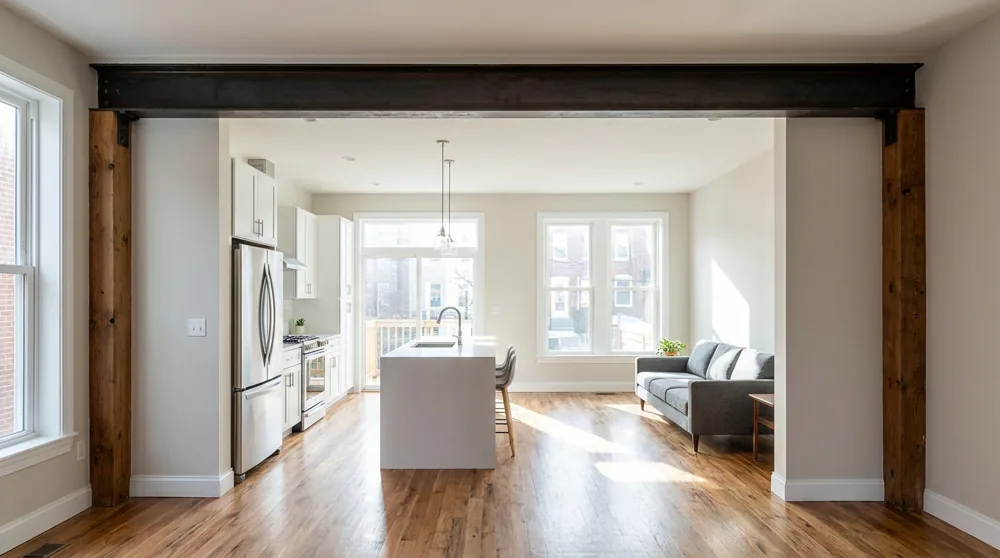
A correctly sized beam carries the load that the removed wall used to carry, transferring it to posts at each end.
Two materials do most of this work:
Engineered LVL (Laminated Veneer Lumber)
LVL is built-up engineered lumber, usually installed as two or three plies bolted together. For a typical rowhome opening of 12 to 16 feet carrying one floor and a roof, an LVL beam is often the right, cost-effective call. It’s strong, predictable, and carpenters can nail and frame to it the same way they would standard lumber, which keeps the build-back clean. The trade-off is depth: a long LVL span can be a fairly deep beam, which matters if your ceilings are already low.
Steel (W-Flange) Beams
A steel beam does the same job in less depth. When the span is long, the load above is heavy (think a full three-story brick rowhome bearing down), or you want the beam tucked up flush so it nearly disappears, steel earns its premium. Steel is heavier to handle, sometimes needs to be brought in and set in pieces or with extra crew, and framing attaches to it differently, but for the tight-headroom, heavy-load situations common in tall rowhomes, it’s frequently the answer.
You don’t choose the beam, the loads do. The structural engineer runs the numbers on what’s above the wall and specifies the exact beam, the connections, and the posts. Our job is to build precisely what those sealed drawings call for.
Flush vs. Dropped
A dropped beam hangs below the ceiling line, you see it, sometimes wrapped as an intentional architectural feature. A flush beam sits up inside the floor structure so the ceiling stays continuous. Flush looks cleaner and keeps headroom but costs more, because it usually means temporarily supporting the floor above, cutting joists, and hanging them off the new beam with joist hangers. In a rowhome with already-modest ceiling height, the flush detail is often worth the extra money.
Permits and Inspections in Baltimore City
Removing a structural wall in Baltimore City requires a building permit, and this is not a step to skip. The permit application has to include sealed structural drawings from a Maryland-licensed engineer showing the new beam, how it’s sized, and how its load travels down to the foundation. The City reviews it, issues the permit, and inspects the work, typically a framing/structural inspection once the beam and posts are in and before everything gets closed up.
Pulling a true non-structural partition with nothing in it sometimes doesn’t require a permit. But the instant electrical, plumbing, or HVAC is in that wall, you’re back in permit territory. And given that the center wall of a rowhome usually is structural, plan on a permit for any real open-concept project.
Skipping the permit is a bad bet in Baltimore. Unpermitted structural work surfaces at resale, fails home inspections, complicates insurance claims, and can force you to expose and re-inspect finished work. We pull and manage the permit, drawings, and inspections as part of the project so it’s done on the record. For how permitting works across remodels here, see our Baltimore kitchen remodel cost guide, which covers the permit process in detail, and our overview of whether kitchen remodeling requires a permit.
What It Actually Costs in Baltimore (2026)
Here’s the honest money. National “remove a wall” averages float around $3,500, but those numbers describe simple partitions in newer homes. A real load-bearing open-up in an old Baltimore rowhome lives higher, because the structure is older, the surprises are real, and the beam work is genuine engineering.
| Scope | Typical Baltimore 2026 Range |
|---|---|
| Remove non-load-bearing partition (patch + paint) | $1,500 – $4,000 |
| Structural engineer (load analysis + sealed beam drawings) | $400 – $1,500 |
| Load-bearing wall removal + LVL beam, modest span | $6,000 – $12,000 |
| Load-bearing wall removal + steel beam or long/flush span | $10,000 – $20,000+ |
| Reroute electrical in the wall | $350 – $1,500 |
| Reroute plumbing / HVAC in or above the wall | $500 – $3,000+ |
| Build-back: drywall, ceiling tie-in, flooring transition, paint | $2,000 – $6,000 |
For the classic project, opening the front living room into the middle room or galley kitchen of a 14-to-16-foot-wide rowhome, most homeowners land in the $8,000 to $15,000 range all-in once you total the engineer, the beam, the shoring, the permit, the trade reroutes, and finishing back to a seamless ceiling and floor. Go to a long flush steel span carrying three stories, or hit major surprises in the wall, and it climbs from there.
What drives the number up or down
- Span and load. A short opening under one floor is cheap structural work. A wide opening under two more floors of brick rowhome is a different animal.
- Flush vs. Dropped beam. Flush costs more (temporary shoring, cutting and re-hanging joists) but keeps your ceiling and headroom.
- What’s living in the wall. Switches, outlets, a plumbing stack, or an HVAC return inside the wall all have to be rerouted, and that’s its own line item.
- Ceiling and floor continuity. Tying the ceiling back in seamlessly and transitioning flooring where the wall stood is real finish carpentry, not an afterthought.
The Surprises Behind a Rowhome Wall
This is where Baltimore-specific experience earns its keep. Homes this old, many built before 1920, hide things inside their walls, and an honest contractor prices for the likely surprises instead of burying them in change orders later.
- Knob-and-tube wiring. Plenty of older rowhomes still have original knob-and-tube circuits running through the very walls you want to remove. You can’t just splice into it. It has to be properly disconnected and rerouted to modern wiring, and finding it often means a small electrical upgrade comes along for the ride.
- Plaster and lath, not drywall. Older rowhome walls are wet plaster over wood lath. It’s heavier, messier to demolish, and the ceiling and adjacent walls you’re tying back into are plaster too, so the patch-and-blend work to make the opening look original is more involved than matching drywall.
- Lead paint. Homes built before 1978 likely have lead paint, and Maryland law requires certified lead-safe (EPA RRP) work practices during demolition. That’s not optional and it affects how the demo is contained.
- A plumbing stack in the wall. Sometimes the wall you want gone carries the home’s main vent or drain stack. Moving a stack is a meaningful plumbing job and can reshape the whole plan, occasionally it’s the reason we recommend a wide pass-through instead of a full removal.
- Out-of-level everything. Century-old rowhomes settle. Floors slope, ceilings dip, nothing is plumb. Setting a dead-level beam into a house that isn’t level is part of the craft, and it’s why this work belongs with a crew that’s done it in these specific houses.
We document what we find behind the wall with photos and talk options with you before proceeding, the same way we handle surprises on every project. You can see how we run a job start to finish on our design process page.
Do You Even Need to Remove the Whole Wall?
Here’s something a lot of contractors won’t lead with: you may not need a full structural removal to get the open, bright feeling you’re after. In a narrow rowhome, a few smaller moves deliver most of the benefit:
- A wide cased opening. Instead of removing the whole wall, widen the doorway into a generous 5-to-8-foot cased opening. Light and sightlines travel through; the wall keeps doing its structural job with a smaller (cheaper) header.
- A pass-through over a half wall. Open the top half of the wall between kitchen and living room and keep a half wall below for counter space, a breakfast bar, or cabinetry. You get the visual connection and gain function.
- Remove only the partition. If a previous owner added a non-structural wall, taking out just that one is dramatically simpler and cheaper than touching the center bearing wall.
These options often get you 80 percent of the open-concept result for a fraction of the cost and disruption. When we walk your home, we’ll tell you honestly whether a full beam-and-removal is worth it for your house, or whether a smarter, smaller move is the better call. We’d rather save you money on a job that gets the same daily-life result.
The Honest Downsides of Open-Concept in a Rowhome
Open layouts are popular for good reasons, light, flow, sightlines, a place where the cook isn’t cut off from everyone else. But it’s worth going in clear-eyed:
- Noise and smell travel. Kitchen sounds and cooking smells now reach the whole floor. Good ventilation matters more in an open plan.
- Less wall for furniture and art. Removing a wall removes the surfaces you lean a sofa against or hang a TV on. It’s worth planning the furniture layout before you commit.
- Heating and cooling one big space. A single open volume can be slightly harder to zone than separate rooms, though in a small rowhome footprint this is usually minor.
None of these are reasons not to do it. They’re reasons to design it well. A thoughtful open-concept rowhome floor keeps a sense of zones, kitchen, dining, living, through flooring, lighting, and furniture placement rather than walls.
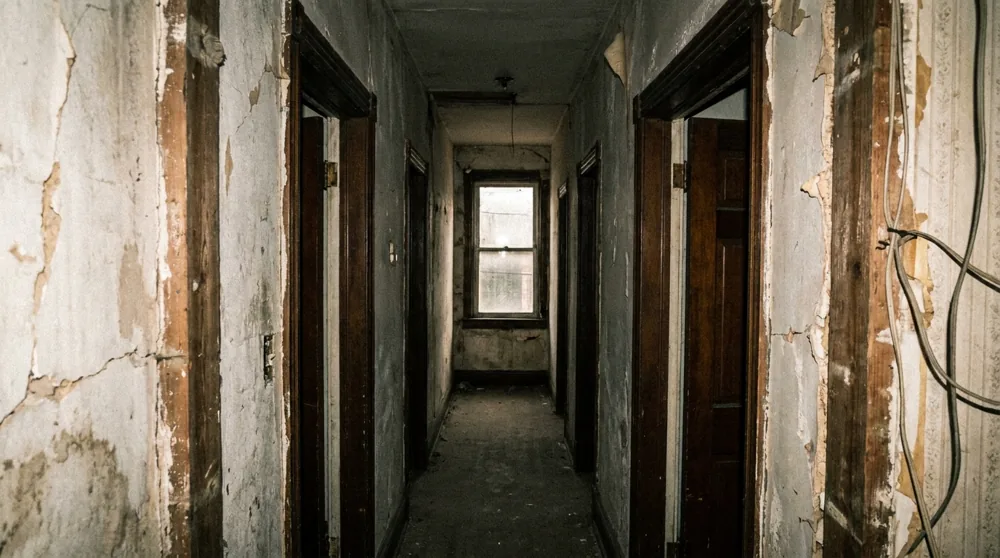
The original rowhome layout, narrow, boxed-in rooms in a row, is exactly what an open-concept remodel is designed to solve.
Why Homeowners Trust Monarch Bay Renovations for This Work
- We do this in Baltimore rowhomes specifically. Party walls, front-to-back joists, plaster, knob-and-tube, settled floors, this is our home turf, not a one-off.
- Engineer-led, by the book. We work from sealed structural drawings, pull the City permit, and pass inspection. No shortcuts on the part of the job that holds your house up.
- Self-performing crews. Our team handles demo, framing, the beam set, drywall, and finish in-house, which means tighter quality control and a single point of accountability instead of finger-pointing between subs.
- Honest scope. If a wide pass-through gets you the same result for less, we’ll say so. Licensed Maryland MHIC contractor (#149066) and Google Guaranteed.
Get a Free Open-Concept Estimate
Thinking about opening up your Baltimore rowhome? The smartest first step is a walkthrough where we identify whether that wall is structural, what beam it would take, and what it’ll really cost, before you fall in love with a plan.
Call (443) 602-9300 or request a free estimate online. We’ll assess the wall, talk through your options (full removal, flush vs. Dropped beam, or a smarter pass-through), and give you a detailed, line-item estimate with no surprises and no pressure. You can also reach us through our contact page with questions about your project.
Frequently Asked Questions
How much does it cost to remove a wall in a Baltimore rowhome?
In 2026, removing a non-load-bearing partition runs about $1,500 to $4,000 including patch and paint. A load-bearing wall, which is most of what you want to remove to open a rowhome, runs $6,000 to $20,000+ once you add a structural engineer, an LVL or steel beam, shoring, the permit, and rerouting plumbing or electrical in the wall. The classic “open the front room into the galley kitchen” job in a 14-to-16-foot-wide rowhome usually lands in the $8,000 to $15,000 range.
How do I know if a wall in my rowhouse is load-bearing?
In a Baltimore rowhome, the wall between the front living room and the middle room very often is load-bearing, because the floor joists typically run front-to-back and are picked up by a center bearing wall or beam. A wall that runs perpendicular to the joists, sits over a basement girder or column, or stacks floor to floor is almost certainly structural. Don’t trust a stud finder for this, an engineer or experienced contractor confirms it, and the City wants engineered drawings to issue the permit anyway.
Do I need a permit to remove a wall in Baltimore City?
Yes, for any structural wall. Baltimore City requires a building permit with sealed structural drawings from a Maryland-licensed engineer showing the new beam and its load path. Removing a true non-structural partition with nothing in it sometimes doesn’t require a permit, but the moment electrical, plumbing, or HVAC is in that wall, a permit is required. We pull and manage the permit and inspections.
LVL beam or steel beam, which do I need?
It depends on the span and the load above. For a typical 12-to-16-foot opening carrying one floor and a roof, an engineered LVL beam (often double or triple ply) is the common, cost-effective answer. For long spans, heavy loads (a full second and third story above), or tight headroom where you need a shallower beam, a steel W-flange does the same work in less depth. The structural engineer sizes it; the loads decide, not preference.
Can I make my rowhome feel open without removing a structural wall?
Often, yes. Widening a doorway into a wide cased opening, removing only a non-load-bearing partition, or creating a pass-through over a half wall can deliver most of the light and sightline benefit at a fraction of the cost and disruption. We’ll tell you honestly whether a full structural removal is worth it for your house or whether a smaller move gets you most of the way there.
How long does it take to open up a rowhome?
The structural portion, demo, shoring, setting the beam and posts, and passing the framing inspection, is usually 1 to 2 weeks of active work for a single opening, plus permit time on the front end. Add the build-back (drywall, ceiling tie-in, flooring transition, paint) and a typical single-wall open-up runs 2 to 4 weeks. Projects combined with a full kitchen remodel run longer, since the wall work folds into the larger timeline.
Will removing a wall add value to my Baltimore rowhome?
Generally yes. Open, light-filled main floors are one of the most sought-after features in the Baltimore market, and they directly address the biggest knock against rowhomes: dark, boxed-in middle rooms. As long as the work is permitted and engineered correctly, an open main floor tends to help both resale value and time on market. Unpermitted structural work does the opposite, which is one more reason to do it on the record.
We serve Baltimore City, Baltimore County, Howard County, Anne Arundel County, and the surrounding areas. Explore our interior renovation services to see how opening up your floor plan fits into a complete home upgrade.
Common Questions
- How much does it cost to remove a wall in a Baltimore rowhome?
- In 2026, removing a non-load-bearing partition in a Baltimore rowhome runs about $1,500 to $4,000 including drywall patch, paint, and any wiring in the wall. A load-bearing wall, which is most of what you want to remove to open a rowhome, runs $6,000 to $20,000+ once you add a structural engineer, an LVL or steel beam, temporary shoring, the permit, and rerouting any plumbing or electrical that lived in that wall. The classic 'open up the front room into the galley kitchen' job in a 14-to-16-foot-wide rowhome usually lands in the $8,000 to $15,000 range.
- How do I know if a wall in my rowhouse is load-bearing?
- In a Baltimore rowhome, the wall between the front living room and the middle room very often is load-bearing, because rowhome floor joists typically run front-to-back and are picked up by a center bearing wall or beam that splits the span. A wall that runs perpendicular to the floor joists, sits roughly over a basement girder or column, or stacks above and below floors is almost certainly carrying load. Don't guess and don't trust a stud finder for this. A structural engineer or experienced contractor confirms it before anyone swings a hammer, and Baltimore City will want engineered drawings to issue the permit anyway.
- Do I need a permit to remove a wall in Baltimore City?
- Yes, for any structural wall. Baltimore City requires a building permit to remove a load-bearing wall, and the application has to include sealed structural drawings from a Maryland-licensed engineer showing the new beam, its size, and how its load reaches the foundation. Removing a true non-structural partition with nothing in it sometimes does not require a permit, but the moment electrical, plumbing, or HVAC is in that wall, a permit is back in play. We pull and manage the permit and inspections as part of the job.
- LVL beam or steel beam, which do I need to open up my rowhome?
- It depends on the span and the load above. For a typical 12-to-16-foot opening carrying one floor and a roof, an engineered LVL (laminated veneer lumber) beam, often a double or triple ply, is the common, cost-effective answer and is easy to nail framing to. When the span is long, the load above is heavy (a full second and third floor of brick rowhome), or headroom is tight and you need a shallower beam, a steel beam (W-flange) does the same work in less depth. The structural engineer sizes it; you don't pick the beam, the loads do.
- Can you make a narrow Baltimore rowhome feel open without removing a structural wall?
- Often, yes. A 14-foot-wide rowhome doesn't always need a full wall gone to feel open. Widening a doorway into a cased opening, removing only a non-load-bearing partition, or creating a large pass-through over a half wall can deliver most of the light and sightline benefit at a fraction of the cost and disruption. We walk the space and tell you honestly whether a full structural removal is worth it for your house or whether a smarter, smaller move gets you 80 percent of the result.