

Renovation Notes
Door Installation in Baltimore: 2026 Costs for Entry & Interior Doors
Your front door is the first thing anyone sees of your Baltimore home, and the last thing standing between your living room and a January cold snap. Whether you own a Federal Hill rowhome with a narrow marble stoop, a Hampden bungalow, or a colonial out in Towson, the door is one of the few improvements that pays you back three ways at once: security, curb appeal, and comfort. A good entry door tightens up your whole house. A bad one, or a good one installed badly, leaks air, sticks in the summer, and rattles every time a bus goes by.
This guide covers what door installation actually costs in Baltimore in 2026, the difference between entry doors, interior doors, and frames, and the rowhome-specific realities that a generic national price guide will never tell you. At Monarch Bay Renovations, we have hung doors in just about every kind of opening this city has, square ones, racked ones, brick ones, and plenty that someone “fixed” before us.
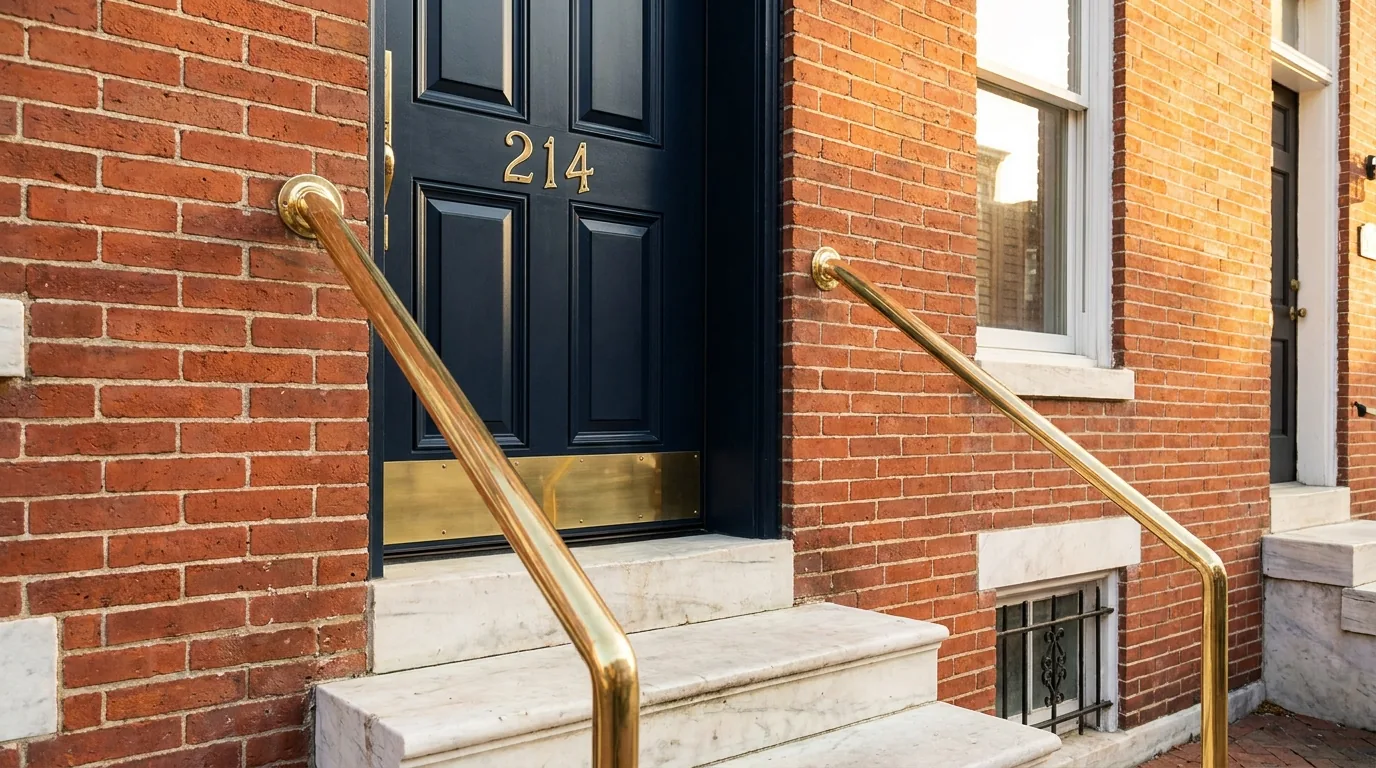
A new entry door is one of the highest-impact upgrades you can make to a Baltimore rowhome’s curb appeal and comfort.
How Much Does Door Installation Cost in Baltimore?
Door prices vary more than most homeowners expect, because “a door” can mean a $300 interior slab or a $6,000 custom entry system with sidelights. Here is where the 2026 Baltimore numbers actually land, installed:
| Door type | Typical installed range (Baltimore, 2026) |
|---|---|
| Interior door (slab or pre-hung) | $350 – $1,250 |
| Standard exterior / entry door | $1,200 – $2,500 |
| Premium fiberglass or decorative-glass entry door | $2,500 – $4,000+ |
| Entry door with sidelights or transom | $1,600 – $4,600 |
| Door frame / jamb (interior) | $200 – $600 |
| Storm door (added to existing entry) | $300 – $700 |
These are installed prices that include labor, basic hardware, and trim. They do not assume your opening is perfect, and on a Baltimore home, it often isn’t, which is the single biggest reason a quote comes in higher than the sticker price on the door itself.
What Drives the Price Up or Down
- The door material. Hollow-core interior doors are cheap; solid-core and solid-wood cost more. On exteriors, steel is the budget pick, fiberglass sits in the middle for value, and solid wood is the premium (and the historic-district requirement).
- Glass and sidelights. Decorative glass inserts, sidelights, and transoms add both material and labor. A plain entry door costs a fraction of the same door flanked by two glass sidelights.
- The condition of the opening. This is the Baltimore line item. A square, sound opening installs fast. A rotted exterior jamb, a settled header, or an out-of-square plaster opening has to be corrected first, and that repair work is where the real cost lives.
- Hardware. A basic knob-and-deadbolt set is included in most quotes. Multi-point locks, smart locks, handlesets, and matching hinges in a finish add up.
- Removal and disposal. Pulling the old door and frame and hauling it off typically adds a modest amount; some contractors fold it in, some itemize it.
If you want a real number for your house rather than a national average, the only honest way to get one is to have someone look at the opening. Request a free estimate and we will measure it and tell you straight.
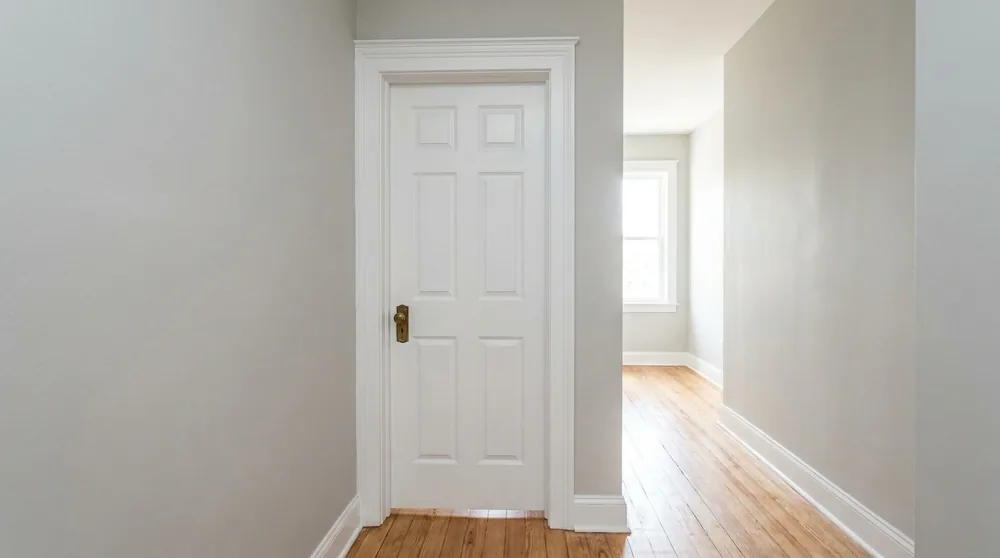
Interior doors in Baltimore rowhomes are usually hung in plaster walls and settled openings that rarely sit perfectly square.
Entry Doors: Security, Curb Appeal, and Baltimore Weather
The front door does three jobs on a Baltimore home, and a good install does all three at once.
Security on a Rowhome Front
On a rowhome, the front door opens straight onto the sidewalk, there is no yard, no setback, no buffer. That makes the door itself your main line of defense, so the slab, the frame, the strike plate, and the deadbolt all have to be solid. A beautiful door bolted into a soft, rotted jamb is not secure no matter how good the lock is. When we install an entry door we make sure the strike side is reinforced into sound framing, because a deadbolt is only as strong as the wood it throws into.
Curb Appeal That Fits the Block
Baltimore’s rowhome blocks have a rhythm to them, and a front door that respects that rhythm lifts the whole house. A clean fiberglass door in a strong color, the right hardware, and proportions that match the neighbors does more for curb appeal, and resale, than almost any other single change at the front of the house. If you are selling, this is one of the cheapest high-impact moves on the board.
Sealing Against Maryland Weather
Baltimore gives a door the full Mid-Atlantic workout: humid 90-plus-degree summers, cold winters in the 20s, and driving rain off the harbor. An entry door that isn’t sealed and flashed correctly will swell and stick in August, leak air in January, and, worst case, let water track behind the brick or into the subfloor. Proper weatherstripping, a good threshold and sweep, and correct flashing at the head and sides are not upsells; they are the difference between a door that lasts twenty years and one that gives you trouble by the second winter.
Material Choices for Baltimore Entry Doors
- Fiberglass is our usual recommendation for Baltimore. It shrugs off humidity, won’t rot or dent, insulates well, and can be finished to look like painted wood, which keeps it acceptable on many historic-adjacent streets.
- Steel is a strong value and a good security choice, though it can dent and can sweat in our humidity if it isn’t a quality insulated unit.
- Solid wood is the most authentic look and, in CHAP-regulated historic districts, often the only permitted choice for a street-facing door. It is beautiful and needs the most upkeep.
Storm Doors
A storm door is a small add that earns its keep in Baltimore. It gives you a second layer against winter wind and summer heat, lets you open the main door for ventilation without bugs, and shields an expensive entry door from sun and rain so it lasts longer. Adding a quality storm door to an existing entry typically runs a few hundred dollars installed. The catch on rowhomes is that some doors and frames sit too shallow or too tight to the masonry for a standard storm door, so it is worth confirming the fit before you fall in love with a model.
Interior Doors: Plaster Walls and Settled Openings
Interior doors look like the simple part of the job, and in a new house they are. In a Baltimore rowhome that has been standing for a hundred years, they are quietly tricky.
Most of these homes have plaster-and-lath walls, not drywall, and openings that have settled out of square over a century. Drop a brand-new pre-hung door into an opening that has racked a half-inch and it won’t close right, won’t latch, or swings open on its own, not because the door is bad, but because the opening moved. Hanging it correctly means shimming the jamb plumb and true regardless of what the wall is doing around it, then trimming to hide the gap. That is craftsmanship, not just screwing in a frame.
You will choose between two approaches:
- A slab door rehung on the existing jamb is the budget route, good when your current frames are sound and you just want fresh doors.
- A pre-hung door (door already mounted in a new frame) is the better long-term result when the old jambs are damaged, painted shut, or hopelessly out of square. It costs more because the whole frame gets reset true.
If you are refreshing a finished space, new interior doors pair naturally with fresh paint and trim and updated flooring, doing them together saves on touch-up and gives the room a finished, intentional look.
Door Frames: Where the Real Work Hides
On older Baltimore homes, the frame is frequently the actual job and the door is the easy part.
Exterior frames take the weather. The bottom of an exterior jamb is the first thing to rot in a rowhome, especially on weather-exposed front and rear walls, and you cannot hang a secure, weathertight door in a frame that is soft at the base. Replacing an exterior frame means tying the new jamb into the masonry opening and flashing it so water sheds out, not in, the same water-management thinking that makes or breaks a window install in a brick rowhome.
Interior frames take the settling. When a header has dropped or an opening has racked, the frame has to be reset plumb before any door will behave. This is why a quote that seems high for “just a door” is often correct, the door is fine; the opening needs to be made right first.
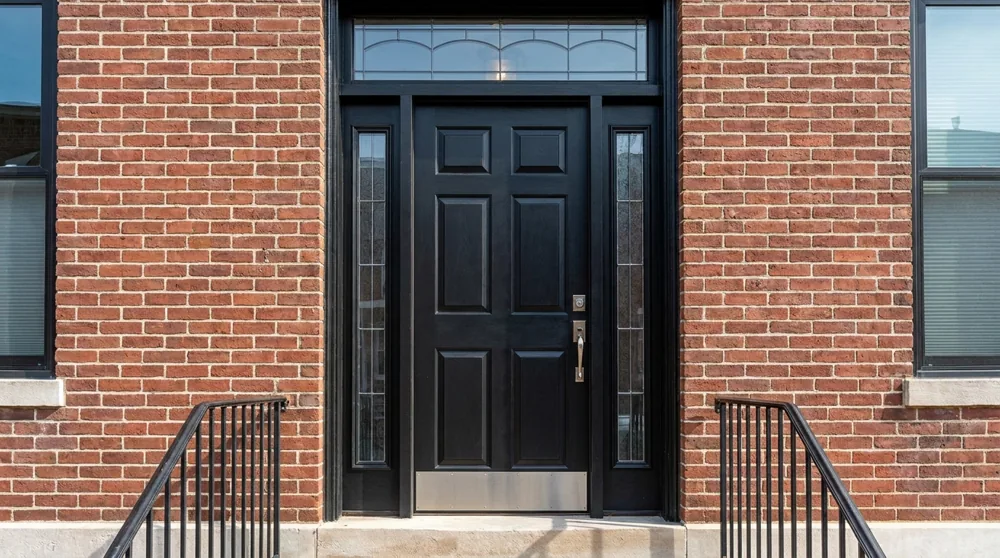
Sidelights and transoms add light and presence to a rowhome entry, and add to both the material and labor cost.
Historic Districts and CHAP
Baltimore has dozens of designated historic districts, Federal Hill, Fells Point, Mount Vernon, Bolton Hill, Canton, parts of Charles Village and more. If your home is in one, your front door is a publicly visible feature, and replacing it usually requires approval from the Commission for Historical and Architectural Preservation (CHAP) before the work begins.
What that means in practice:
- On the street-facing elevation, CHAP cares about the door’s material, panel configuration, and proportions, a flat modern slab where a paneled door belongs will get flagged.
- A sound original door can often be repaired, re-fitted, and weatherstripped rather than replaced, and in many districts that is exactly what the commission prefers.
- The part homeowners miss: in a historic district you generally cannot pull your permit until CHAP issues its approval, and that review takes time. It belongs at the front of your timeline, not the end.
- Rear and less-visible doors usually get more latitude than the front.
We have navigated CHAP approvals across the city and can tell you early whether your front door needs a review and what is likely to fly. Contact us and we will walk you through it before you commit to a door.
Permits and Lead Paint
For a like-for-like door replacement, same opening, same size, Baltimore City generally does not require a permit. Cutting a new opening, widening an existing one, or altering a structural header does require a building permit and possibly a structural review. If you are unsure, a licensed contractor who pulls permits regularly will know which side of the line your project falls on.
One more Baltimore reality: homes built before 1978 may have lead paint around door and frame trim. Maryland law requires certified lead-safe work practices when that paint is disturbed, and we follow all EPA Renovation, Repair, and Painting (RRP) requirements as a matter of course.
How Long Does Door Installation Take?
For a straightforward replacement in a sound opening, a single interior door takes one to two hours and a single exterior entry door two to four hours. The variable, as always in Baltimore, is the opening. If the frame needs replacing, a header has dropped, or an exterior jamb is rotted, the job grows because the repair comes first. A whole-house refresh of interior doors usually wraps in a day or two; a front entry with sidelights and a transom is a half-day to a full day on its own.
Why Homeowners Choose Monarch Bay Renovations
- Baltimore-specific know-how. We work in rowhomes, brick openings, plaster walls, and historic districts every week. Out-of-square openings and rotted jambs don’t surprise us.
- Licensed and insured. Fully licensed Maryland Home Improvement Contractor (MHIC #149066) and Google Guaranteed, with full insurance.
- Permits and CHAP handled. We manage permit applications, CHAP submissions, and inspections so you don’t have to.
- The install done right. Square, plumb, properly flashed, properly sealed, because on an old home the install matters as much as the door.
- Honest, detailed estimates. We tell you what the opening actually needs, with no surprise line items on the back end.
Doors are also a natural piece of a larger refresh. If you are already planning interior renovation work, bundling the doors in usually saves on labor and gives the whole space a finished feel.
Get Your Free Door Installation Estimate
Whether it is a single front door to lift your curb appeal or a houseful of interior doors as part of a bigger remodel, Monarch Bay Renovations delivers expert installation backed by real Baltimore experience. We serve Baltimore City, Baltimore County, Howard County, Anne Arundel County, and the surrounding areas.
Call (443) 602-9300 or request a free estimate online. We will come measure the opening, talk through your options, and give you a clear written quote, no pressure, no obligation.
Common Questions
- How much does it cost to install an entry door in Baltimore in 2026?
- A new exterior entry door installed in Baltimore typically runs $1,200 to $2,500 for a quality steel or fiberglass door in a clean opening, and $2,500 to $4,000+ for premium fiberglass or a door with decorative glass. Add $1,600 to $4,600 once you bring in sidelights or a transom. The number swings on the door material, the hardware, and — the part that trips people up on old rowhomes — whether the existing opening is square and the framing is sound.
- How much does it cost to install an interior door in Baltimore?
- An interior door installed in Baltimore generally costs $350 to $1,250, with most standard pre-hung doors landing around $450 to $900 each. Slab doors hung on an existing jamb are cheaper; a full pre-hung unit in an out-of-square plaster opening costs more because the jamb has to be shimmed true. If you're doing several doors at once, the per-door price usually drops.
- How much does a door frame cost to install or replace?
- Installing or replacing a door frame (the jamb and casing) in Baltimore runs roughly $200 to $600 for an interior opening and more for an exterior one, where the frame also has to be flashed and sealed against the weather. On older Baltimore homes the frame is often the real job — rotted exterior jambs and racked, out-of-square interior openings are common and have to be corrected before any new door will hang and latch properly.
- Do I need a permit to replace a door in Baltimore?
- Replacing a door in the same opening (same size, same location) generally does not require a permit in Baltimore City. Cutting a new opening, widening an existing one, or changing a structural header does require a building permit. If your home is in a historic district, changes to a street-facing front door usually need CHAP approval before you touch it. We handle the permitting and any CHAP review as part of the job.
- Can I replace the front door on a historic Baltimore rowhome?
- Yes, but if the home sits in a CHAP or Maryland Historical Trust historic district, the front door is a publicly visible feature and replacement usually needs a Certificate of Approval before the work — and before any permit. CHAP cares about material, panel configuration, and proportions on the street-facing elevation. A solid original door can often be repaired and weatherstripped instead of replaced, which is frequently what the district prefers.
- What is the best type of front door for a Baltimore rowhome?
- For most Baltimore rowhomes, an insulated fiberglass entry door is the best all-around choice: it resists the humidity and temperature swings, won't rot or dent like wood or steel, and can be made to look like painted wood for historic streets. Steel is a strong budget option with good security. Solid wood is the right call in historic districts where CHAP requires it. The door matters, but on an old rowhome the install and the weather sealing matter just as much.