

Renovation Notes
Baltimore Remodeling Permits Guide (2026): ePermits, CHAP & What You Actually Need
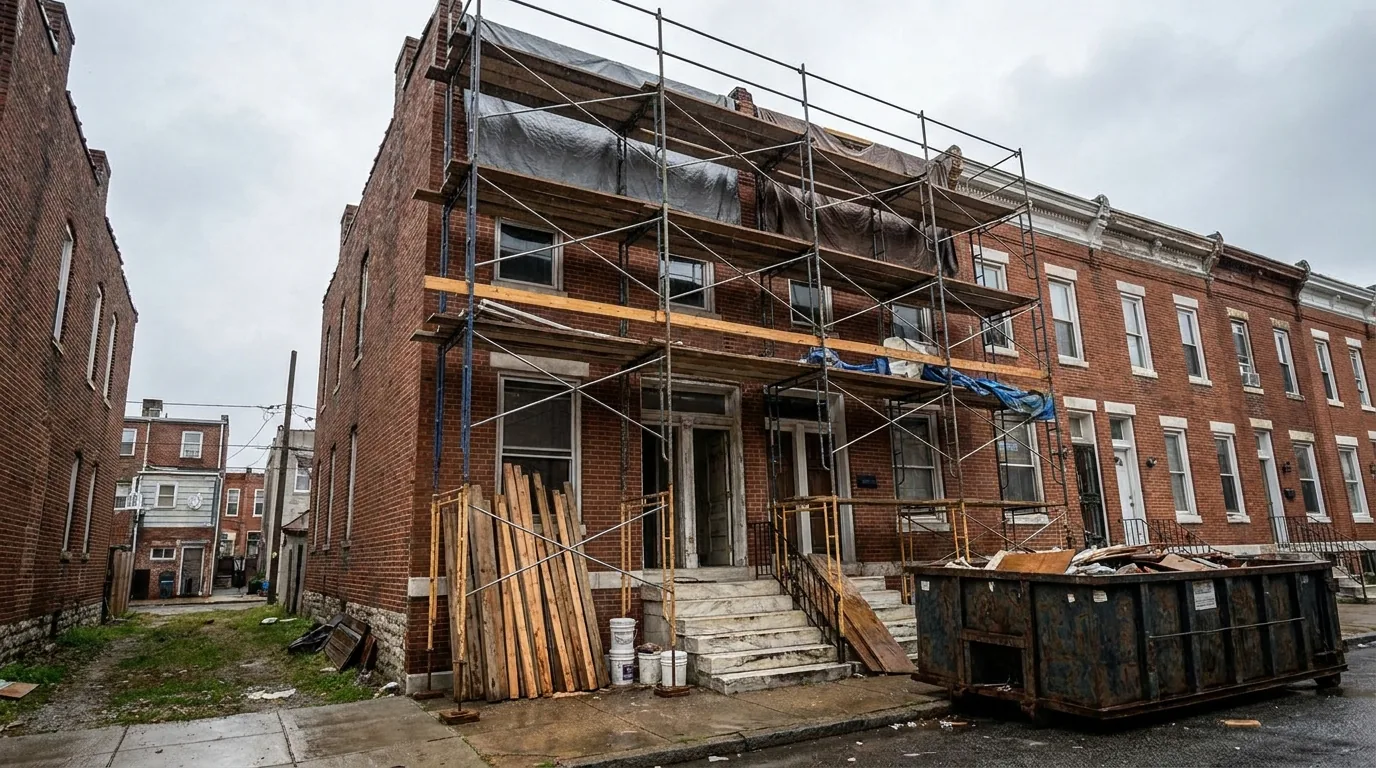
If you are planning a remodel in Baltimore, somewhere between picking out tile and lining up a contractor, a quieter question shows up: do I actually need a permit for this? It is not the most exciting part of a renovation, but it is one of the most expensive to get wrong. A permit you skipped can surface years later when you sell, and a CHAP approval you did not know you needed can stall your whole project for two months.
This guide is the plain-English version we wish every Baltimore homeowner had before they started. We will walk through when a permit is required by project type, how the city’s ePermits system actually works, the historic-district rules that trip people up, what it all costs, and what really happens if you skip it. At Monarch Bay Renovations, we pull permits across Baltimore City and the surrounding counties every week as a licensed Maryland Home Improvement Contractor (MHIC #149066), so this is the process as we live it, not a copy-paste of code language.
A permit-ready Baltimore renovation: scaffolding up, materials staged, and the paperwork handled before the first wall comes down.
The Short Answer: When Do You Need a Permit?
Baltimore City puts it simply. You need a permit any time you are “constructing, enlarging, altering, repairing, rehabilitating, demolishing (interior or exterior), or moving any structure,” or installing or replacing electrical, gas, mechanical, HVAC, or plumbing systems. The city’s own guidance is blunt about the gray area: minor repairs usually don’t need a permit unless the item is completely replaced or significantly changed, but renovations, modifications, and reconstructions always need a permit.
- Am I changing the structure? Moving or removing a wall, cutting a new opening, building an addition, finishing a basement, building a deck. If yes, you need a permit.
- Am I touching a system? New wiring, new circuits, moving plumbing, adding a gas line, replacing the HVAC. If yes, you need a permit, and that work has to be done by a licensed trade.
If the answer to both is no, you are usually in cosmetic territory, paint, flooring, cabinet refacing, swapping a faucet for a same-spot faucet, and a permit generally is not required. The moment a project crosses into either bucket, the permit is not optional.
What Needs a Permit, Project by Project
The “do I need a permit” question is really a different question for every kind of remodel. Here is how it shakes out for the projects Baltimore homeowners ask us about most.
Kitchen Remodels
A cosmetic kitchen refresh, new cabinet doors, countertops dropped onto existing bases, a tile backsplash, fresh paint, typically does not need a permit. But the moment you relocate the sink, add a dishwasher circuit, move the range, run new outlets along the counter, or take out a wall to open the kitchen to the dining room, you are into permit territory for plumbing, electrical, or structural work. Most full kitchen remodels in our kitchen cost range of $19K-$35K involve at least one of those, so plan on a permit.
Bathroom Remodels
Same logic. A like-for-like vanity swap and new tile usually stay cosmetic. A real bathroom remodel almost never does, because the whole point is often moving the toilet, reworking the shower drain, adding an exhaust fan circuit, or upgrading the supply lines in an old rowhouse. All of that is permitted plumbing and electrical work. If you are weighing a full renovation, our Baltimore bathroom remodel cost guide walks through where those dollars go.
Window Replacement
This one surprises people. Like-for-like window replacement (same size, same opening) in a non-historic property often does not require a permit, but enlarging an opening, adding a new window, or changing the size always does. And if your home is in a historic district, the rules flip entirely, even a same-size swap needs CHAP review first. We cover the full picture in our Baltimore window replacement guide, including egress requirements for bedroom windows.
Basement Finishing and Egress
Finishing a basement is a permit job, full stop. You are adding living space, which means framing, electrical, often plumbing for a bathroom or wet bar, insulation, and almost always an egress window if you are creating a bedroom. Baltimore building code requires a code-compliant emergency escape opening for any below-grade sleeping room, and cutting an egress well into a foundation is exactly the kind of structural work inspectors look for. Skipping the permit here is also skipping the safety check that egress exists. Our basement finishing cost guide breaks down the budget.
Additions, Decks, and Layout Changes
Anything that grows your footprint or changes the structure, room additions, second-story pop-ups, decks, removing load-bearing walls, needs a permit and usually engineered plans. Decks over a certain height and any deck attached to the house require a permit and a footing inspection. These are the projects where a missed permit is most likely to become a Stop Work Order, because the work is visible from the street.
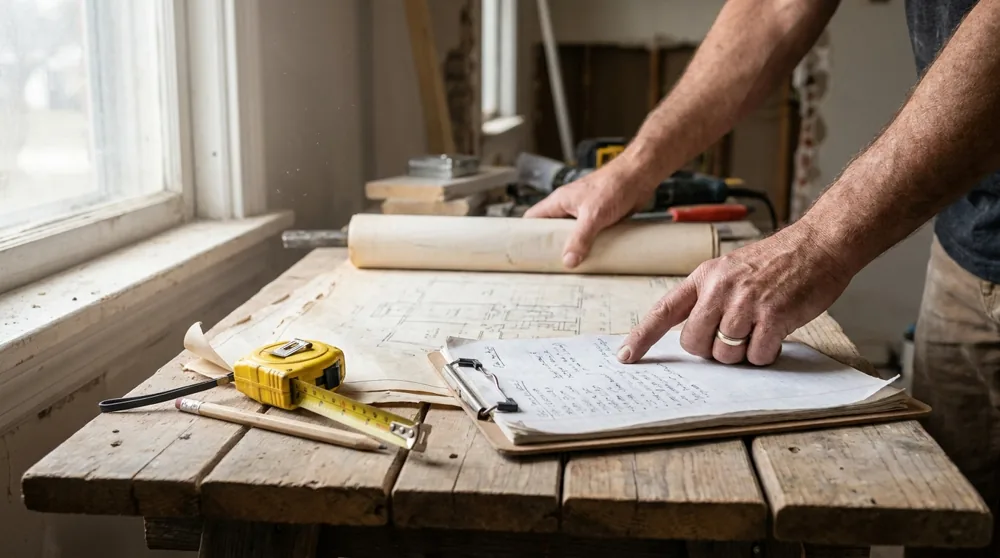
The right time to sort out permits is before demolition, not after an inspector knocks.
How Baltimore City’s ePermits System Works
Baltimore City runs permitting through an online system called ePermits, hosted on the Accela platform and managed by the Department of Housing and Community Development (DHCD). With the exception of a few temporary-event permits, everything goes through it.
- Create an account and start an application in the ePermits portal. You will classify the work (building, electrical, plumbing, mechanical) and describe the scope.
- Upload plans and documents. Structural work, additions, and many remodels require drawings. Cosmetic-adjacent jobs may go through with less.
- Plan review. DHCD reviews the application. More than 98% of applications submitted with plans are reviewed in under 30 days, and simple residential permits often move faster.
- Pay fees and the permit is issued. You pay online or at the One-Stop Shop. The permit is not active until fees are paid.
- Inspections. As the work progresses, you schedule inspections (rough-in for electrical and plumbing, framing, final). Each must pass before you close out.
If you would rather not create an account and decode permit categories, that is exactly the part we handle for clients. The city also runs an in-person One-Stop Shop at 417 E. Fayette Street, Room 202, and a permits help line at 443-984-1809.
A Quick Reference Table
| Project | Permit usually required? | Why |
|---|---|---|
| Paint, flooring, cabinet refacing | No | Cosmetic, no structure or systems |
| Full kitchen remodel | Yes | Plumbing/electrical, often layout |
| Full bathroom remodel | Yes | Plumbing and electrical work |
| Like-for-like windows (non-historic) | Often no | Same size, same opening |
| Windows in a historic district | Yes (CHAP first) | Exterior change in protected district |
| Basement finishing | Yes | New living space, egress, systems |
| Deck or addition | Yes | Structural, footprint change |
Historic Districts: The CHAP Step Everyone Forgets
This is the single most common timeline mistake we see, and it only affects part of Baltimore, but it affects a lot of the part where the beautiful old housing stock lives.
Baltimore has more than 30 locally designated historic districts, including Federal Hill, Fells Point, Mount Vernon, Bolton Hill, Canton, and parts of Charles Village. If your home sits in one, any exterior change must be approved by the Commission for Historical and Architectural Preservation (CHAP) before the city will issue your building permit. That covers windows, doors, siding, roofing, masonry, even some paint and exterior fixtures.
The piece that catches people off guard: CHAP approval is not part of the permit, it is a gate in front of the permit. CHAP issues an Authorization to Proceed, and only after you have that can you apply for the building permit. There are two tracks:
- Minor work that matches the historic profile (repairing existing fabric, like-for-like windows in the right material and configuration) can be reviewed by CHAP staff. When the application is complete, an Authorization to Proceed can sometimes be issued within a couple of days.
- Major work that changes the massing, scale, or appearance goes to the full Commission, which meets once a month and takes public testimony. Realistically, that adds 30 to 90 days to your front-end timeline.
The practical takeaway: if you are in a historic district, the CHAP application belongs at the start of your planning, not the end. We sequence historic projects so the CHAP submission goes in early and the build schedule lines up behind the Authorization to Proceed instead of stalling on it. And if you are in a CHAP district, there is a separate benefit worth knowing about: the Baltimore City CHAP historic tax credit gives qualifying homeowners and investors a 10-year property tax credit on the increased assessed value from the rehabilitation — a real dollar offset that most people in these neighborhoods have never claimed.
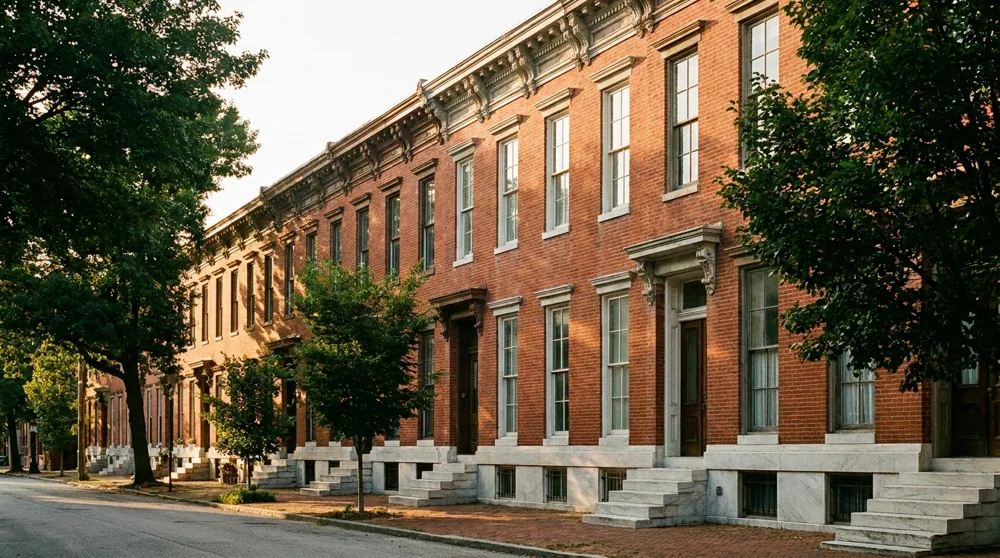
In Baltimore’s historic districts, even a same-size window swap needs CHAP sign-off before the building permit.
City vs. County: It Is Not the Same Process
Baltimore City and Baltimore County are separate jurisdictions with separate permit offices, and homeowners near the line mix them up constantly.
Baltimore City permitting runs through DHCD’s ePermits system described above, with the historic-district CHAP overlay. Fees are scaled to project scope.
Baltimore County runs its own online permit system through the Department of Permits, Approvals and Inspections, and all building, plumbing, and electrical applications must be completed online. County building permit fees generally start at a $100 to $200 minimum and rise with the project. New residential development can also carry a development impact fee of roughly $6 per square foot of enclosed area, though some revitalization districts are exempt. The county does not have CHAP, but it has its own zoning and inspection rules.
If your project spans surrounding counties, Howard, Anne Arundel, and others each have their own portals and fee schedules. The work is similar; the paperwork is not interchangeable. Confirming which jurisdiction you are in is step one, and it is not always obvious from the mailing address.
What Permits Actually Cost
Permit fees are modest relative to a remodel, and they buy you something real: an inspection record that your work meets code.
- Baltimore City: fees scale with the value and scope of work. A typical kitchen or bathroom remodel permit lands in the $300 to $800 range; larger structural projects with plan review cost more.
- Baltimore County: a $100 to $200 minimum for most residential permits, scaling up by project, plus possible impact fees on new construction.
Compared to the cost of tearing out unpermitted work or losing a home sale, these are rounding errors. We build permit costs directly into the written estimate, so the number you approve is the number you pay.
What Happens If You Skip the Permit
It is tempting, especially when a handyman offers to “just do it” cheaper without one. Here is the real downside, straight from Baltimore City code.
- Stop Work Order. If an inspector finds unpermitted work, the city can halt your project on the spot. Now your kitchen is gutted and frozen while you scramble for paperwork.
- Fines. Working without a required permit can carry a fine of up to $1,000, or 50% of the permit fee, whichever is greater. In a historic district, work done without an Authorization to Proceed draws a civil citation on top of the Stop Work Order. After a notice period, each day can count as a separate violation.
- You still pay for the permit. Penalties do not replace the permit. You pay the fine, then pull the permit and pay the fees anyway, often for work that now has to be partially opened back up so an inspector can verify what is behind the drywall.
- It haunts the sale. This is the one that bites homeowners years later. Unpermitted additions, finished basements, and bathrooms routinely surface during a buyer’s inspection or appraisal. Deals fall through, prices get renegotiated, and lenders balk. “Permitted” is a checkbox buyers and their agents look for.
- Insurance and safety. If unpermitted electrical or structural work contributes to a fire or failure, your insurer can deny the claim. The inspection you skipped was the safety check.
None of this is worth the few hundred dollars and few weeks a permit costs. We have been called in to fix more than one “great deal” remodel that turned into a code-compliance project.
Who Can Pull Your Permit (and Why It Matters)
In Maryland, home improvement work on a 1-2 family dwelling must be performed by a contractor holding a valid Maryland Home Improvement License (MHIC). Electrical, plumbing, gas, and mechanical work each require separately licensed trades. That licensing is not bureaucratic box-checking, it is why a legitimate contractor can pull your permit and an unlicensed one cannot.
So if someone offers to do your remodel but tells you to pull the permit yourself as the homeowner, or to skip it entirely, that is a signal. A licensed contractor stands behind the work, carries insurance, and takes responsibility for the inspections. An unlicensed handyman who cannot pull the permit also cannot give you the MHIC protections, the bonded recourse, or the clean paper trail that protects your home’s value. For a full walkthrough of how to vet a contractor before you sign, including what to look for in a written estimate and which red flags to watch for, see the how to choose a contractor in Baltimore guide.
We Handle the Permitting For You
Permits are genuinely part of the job at Monarch Bay Renovations, not a favor we tack on. As a licensed MHIC contractor (#149066) and Google Guaranteed business, here is what that means for you:
- We tell you up front, on the walkthrough, whether your project needs a permit and whether CHAP is in play.
- We prepare and submit the ePermits application and any required plans.
- For historic homes, we handle the CHAP Authorization to Proceed and sequence it so it does not blow up your timeline.
- We schedule and meet every inspection, rough-in through final.
- We fold every permit and CHAP cost into your written estimate, no surprise line items.
You get a finished remodel with a clean inspection record, the kind that makes a future home sale boring in the best way. Planning a full gut rehab where permits touch every trade — plumbing, electrical, structural, and HVAC all at once? The 2026 Baltimore gut rehab cost guide covers what those projects run by tier before the walkthrough.
Ready to start? Call us at (443) 602-9300 or request a free estimate. We will walk your project, tell you exactly what permits it needs, and handle the rest. Have a quick question first? Contact our team and we will point you in the right direction, even if it is not a project for us.
This guide is general information for Baltimore-area homeowners, not legal advice. Permit requirements change, and every project is different. Always confirm current requirements with Baltimore City DHCD, Baltimore County Permits, Approvals and Inspections, or a licensed contractor before starting work.
Common Questions
- Do I need a permit to remodel my house in Baltimore?
- It depends on the work. Baltimore City requires a permit any time you construct, enlarge, alter, repair, rehabilitate, or demolish a structure, or install or replace electrical, gas, mechanical, HVAC, or plumbing systems. Minor cosmetic work, painting, swapping fixtures, replacing flooring, refacing cabinets, generally does not need one. Anything that touches plumbing, wiring, or a load-bearing wall does. When in doubt, ask before you start.
- How much do remodeling permits cost in Baltimore?
- Baltimore City permit fees are tied to the value and scope of the work. A typical kitchen or bathroom remodel permit runs roughly $300 to $800, while larger projects with structural plans cost more. Baltimore County permits start at a $100 to $200 minimum and scale up from there. We fold all permit costs into your written estimate so there are no surprises.
- How long does it take to get a building permit in Baltimore?
- Baltimore City reviews more than 98% of permit applications submitted with plans in under 30 days, and many straightforward residential permits are issued faster. The big timeline variable is whether your home is in a historic district. If it is, CHAP must approve the exterior work first, which adds 30 to 90 days before you can even pull the building permit.
- What is a CHAP permit and do I need one?
- CHAP is Baltimore's Commission for Historical and Architectural Preservation. If your home is in one of the city's 30-plus local historic districts, any exterior change, including windows, doors, siding, and roofing, must get a CHAP Authorization to Proceed before the city will issue a building permit. Minor work that matches the historic profile can be approved by staff in days; major changes go to a monthly public hearing.
- What happens if I remodel without a permit in Baltimore?
- Working without a required permit in Baltimore City can trigger a Stop Work Order and a fine of up to $1,000 (or 50% of the permit fee, whichever is greater), with each day counted as a separate violation after a notice period. You will still have to pull the permit and pay the fees afterward, and unpermitted work routinely derails home sales when it surfaces during inspection or appraisal.
- Can my contractor pull the permit for me?
- Yes, and a licensed one should. In Maryland, home improvement work on a 1-2 family dwelling must be done by a contractor holding a valid MHIC license, and electrical, plumbing, and mechanical work require separately licensed trades. Monarch Bay Renovations (MHIC #149066) pulls the permits, schedules the inspections, and handles CHAP submissions as part of the job. An unlicensed handyman cannot legally pull your permit, which is a red flag worth paying attention to.